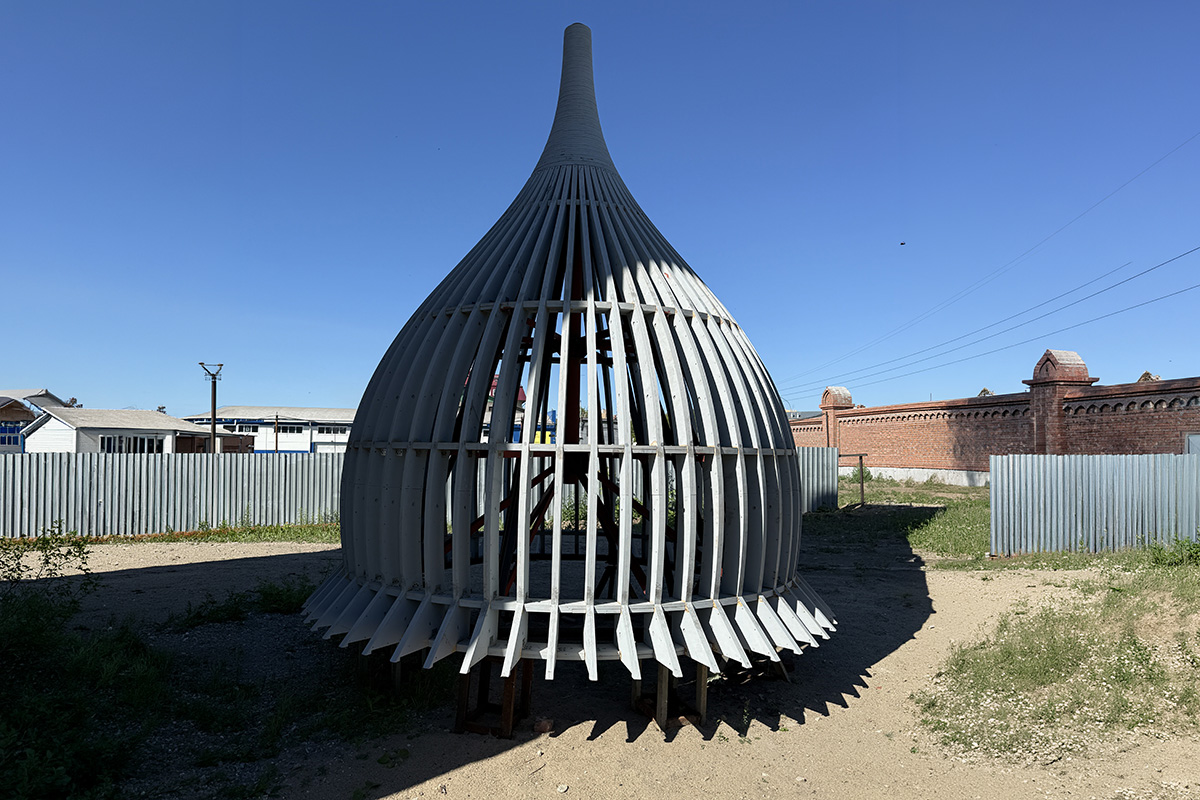
One of the most technically demanding elements of an Orthodox church is often its dome. Although dome construction has been refined over many centuries, relatively few fabricators today specialize in this work. The reason is simple: behind the seemingly clean and elegant silhouette is a complicated combination of structure, geometry, metalwork, weather protection, and craftsmanship.
Traditional Construction
One of the most common methods uses a combined metal-and-timber structure. A structural steel core supports a secondary wooden framework made of closely spaced ribs that create the curved profile of the dome. The surface is then covered with carefully fitted metal panels and finished in painted metal, copper, stainless steel, or a gold-colored or gilded finish.
The photographs from one of the Orthodox church construction sites illustrate just how complex this apparently simple form actually is. Dozens of structural members must work together to create the precise curvature visible from the ground.
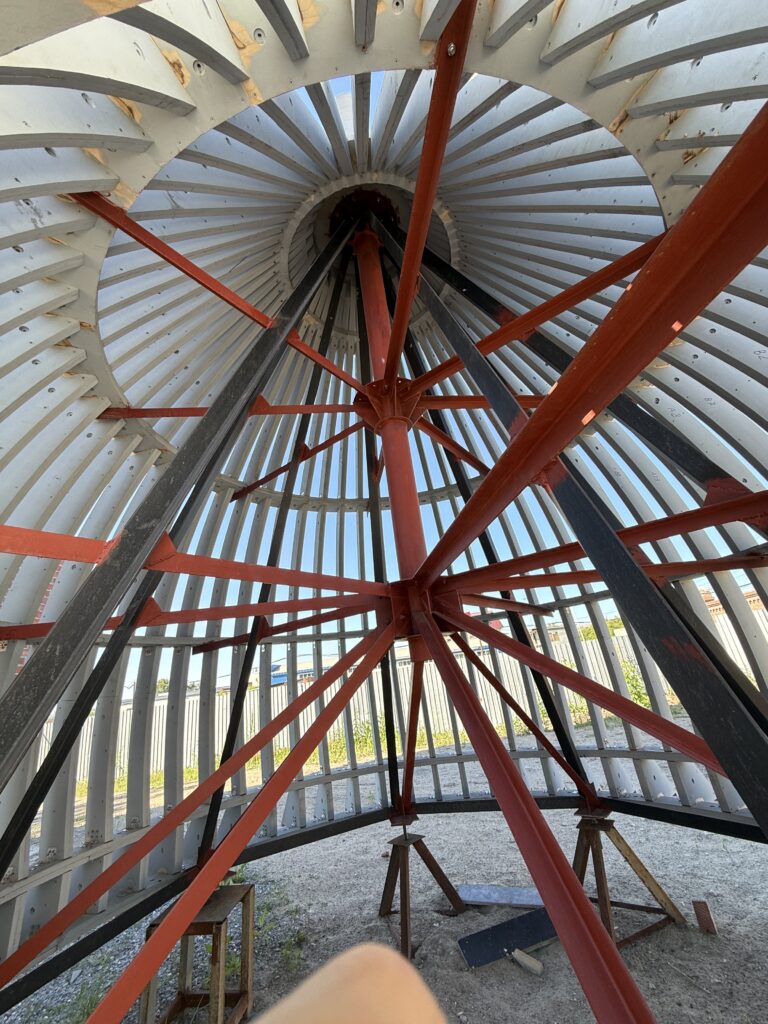
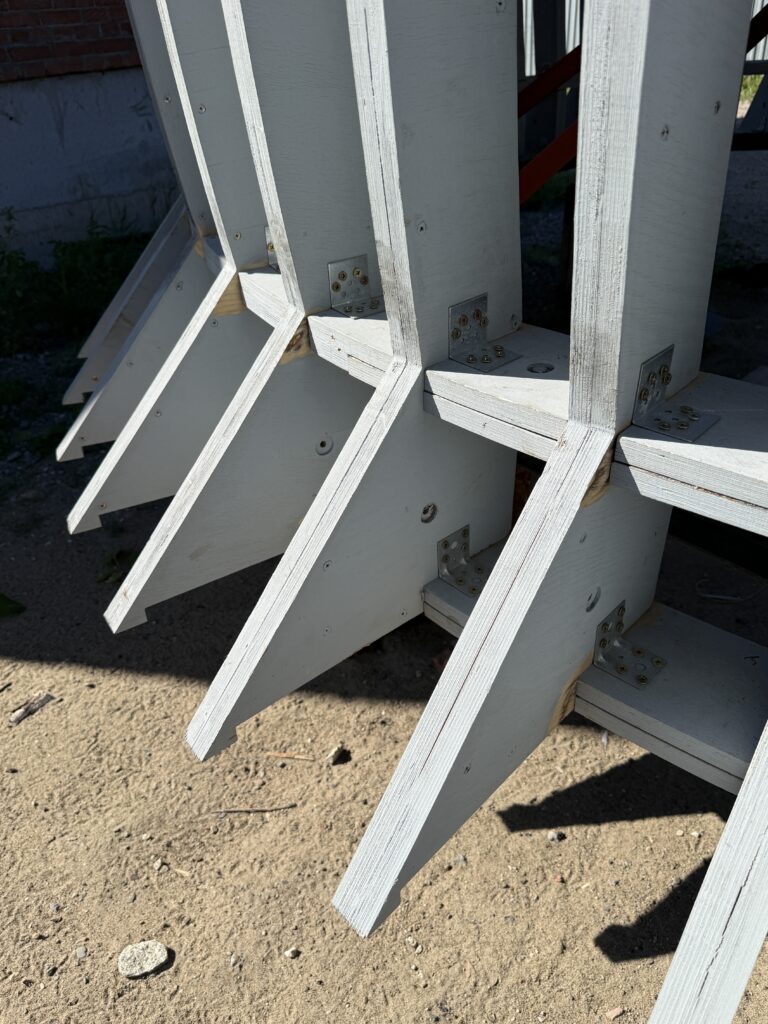
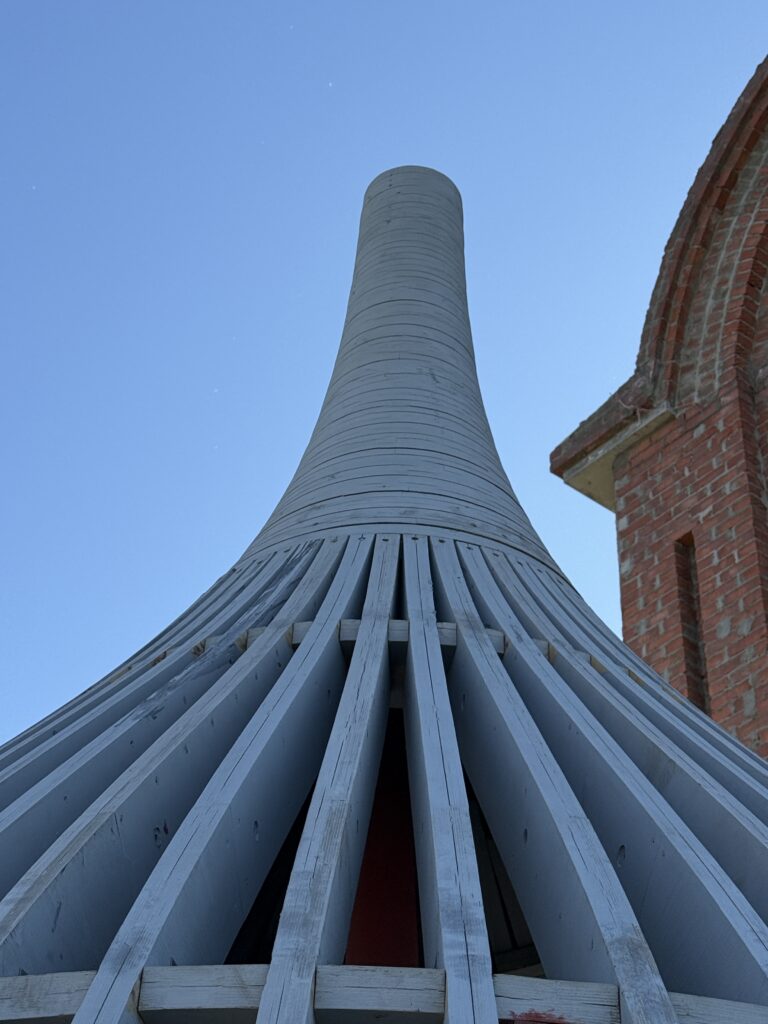
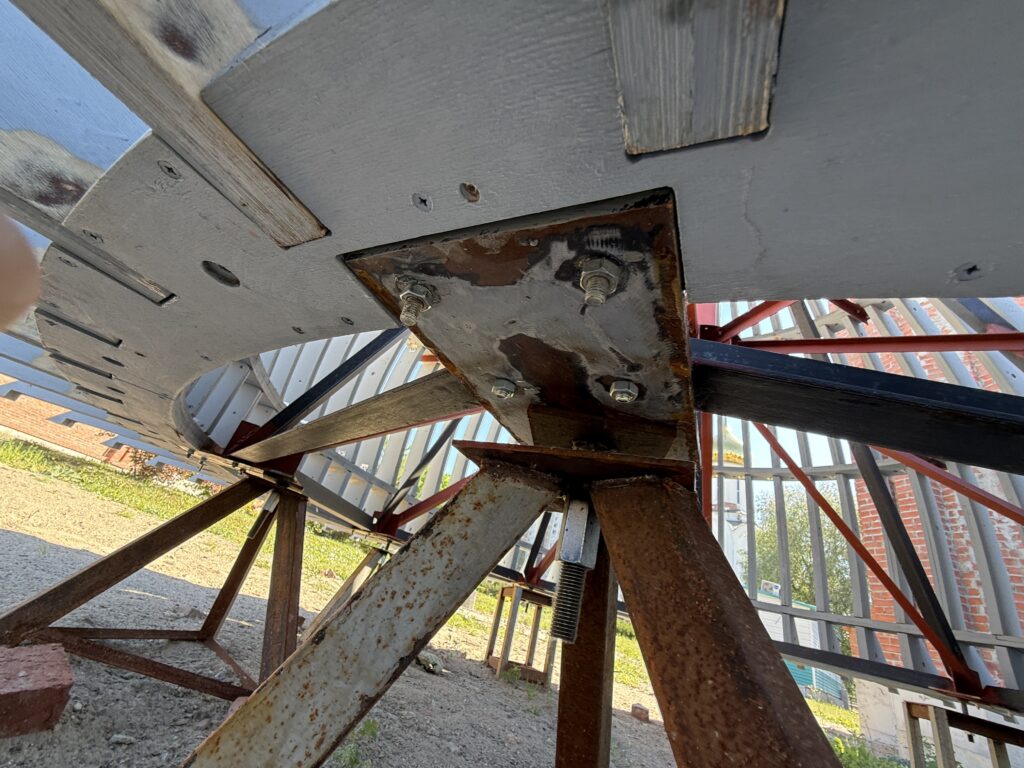
Fully metal domes are also used. They can be more difficult to fabricate but generally offer excellent durability. All-timber structures exist as well, although hybrid steel-and-timber systems remain a practical and common approach.
Hydroforming: An Unusual Alternative
A particularly interesting technology is hydroforming. A polygonal metal shell is fabricated and hermetically welded. Water is then pumped into the sealed shell under very high pressure, gradually forcing the metal outward until the required rounded profile is achieved.
In simple terms, the metal form is “inflated” using water pressure. This technique can dramatically reduce the amount of manual work required to produce complex curved surfaces. However, it requires specialized equipment, accurate welding, engineering expertise, and experienced fabricators, so relatively few companies can offer it.
Fiberglass Domes
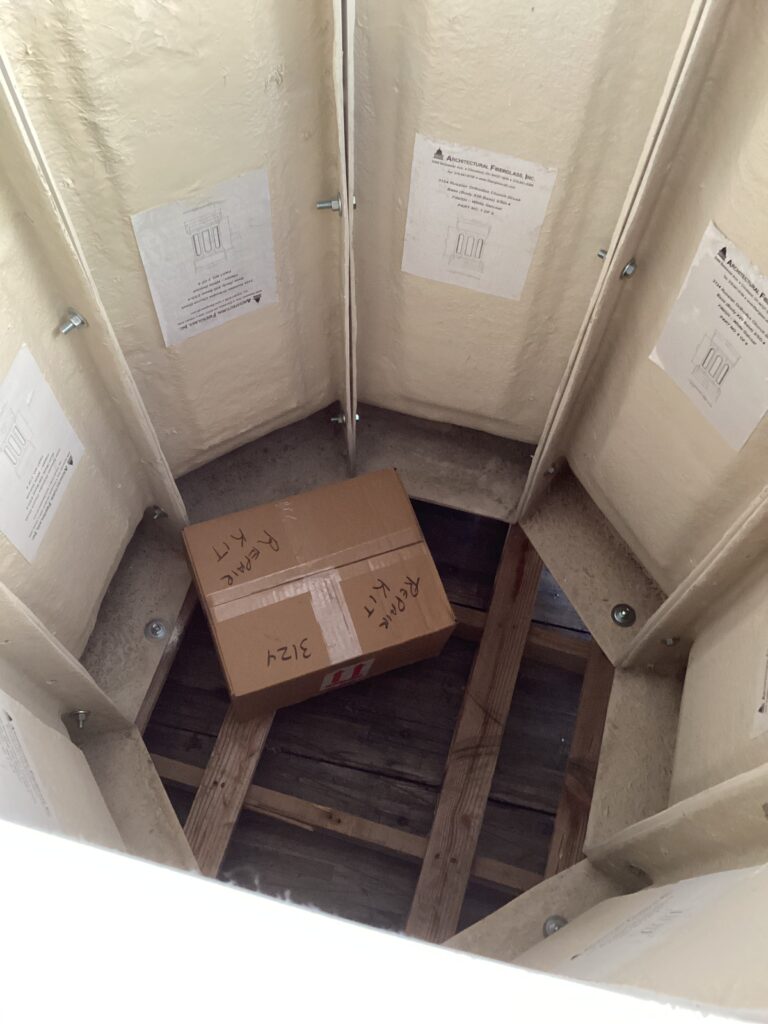
Another technology gaining popularity is the fiberglass dome. These shells are manufactured in molds and offer two major advantages.
The first is weight. Fiberglass is significantly lighter than traditional metal-and-timber construction, reducing loads on the church structure. Smaller domes may require relatively little additional structural reinforcement.
The second is economy. Once a manufacturer already has the required mold, fabrication can be considerably less labor-intensive than traditional custom construction.
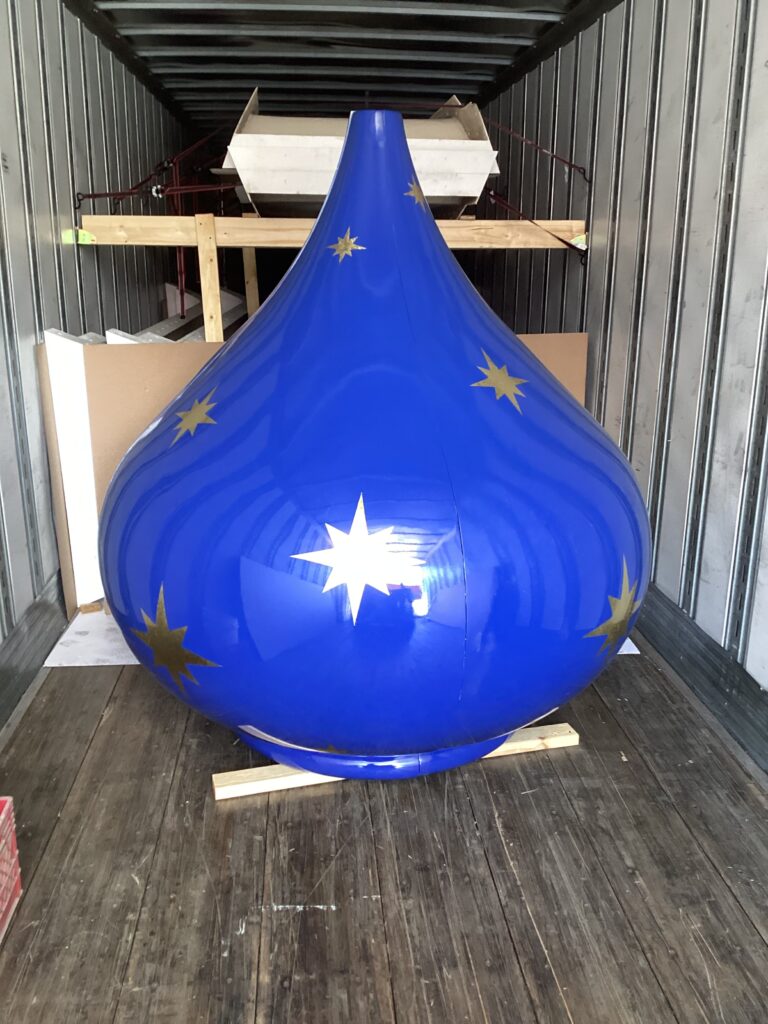
There are tradeoffs. Fiberglass is a composite material in which glass fibers are embedded in a polymer resin. Long-term ultraviolet exposure gradually degrades the resin matrix. Without adequate protective coatings and maintenance, the surface can lose gloss and color, develop chalking and microcracking, and eventually expose reinforcing fibers. Modern UV-resistant coatings slow this process considerably, but fiberglass generally ages differently from a properly maintained metal system.
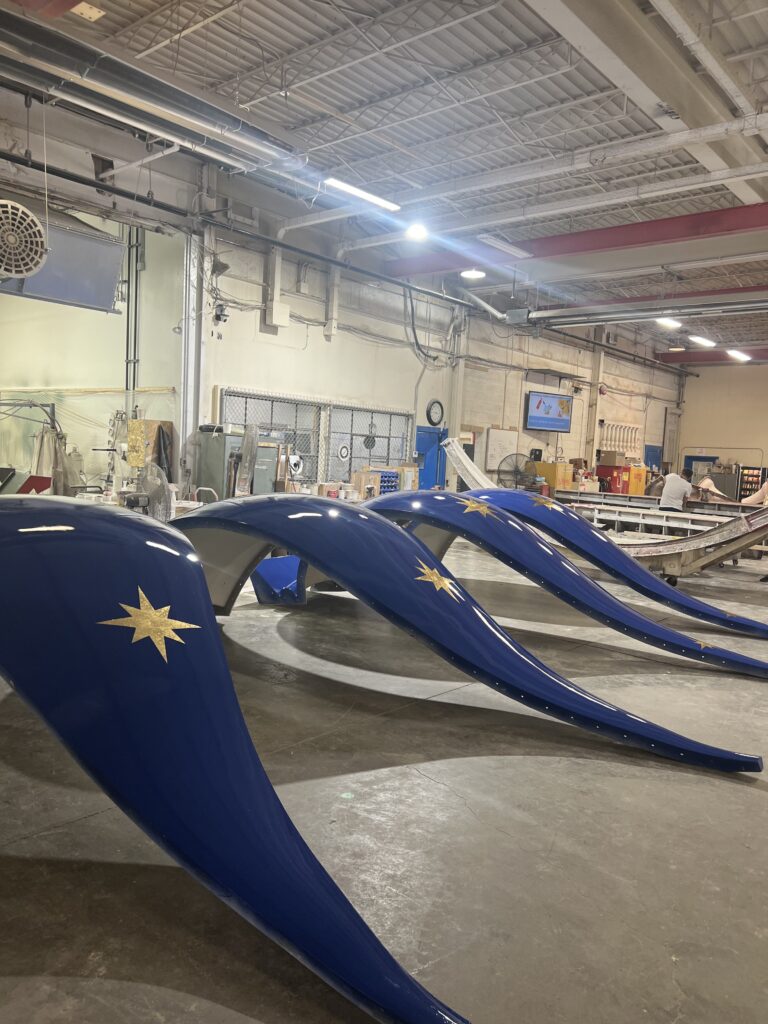
The other limitation is architectural freedom. Manufacturers usually maintain a catalog of existing molds. Producing a completely new dome profile requires expensive tooling, making custom shapes less economical for a single project.
So, What Does a Dome Cost?
The answer depends on diameter, geometry, material, structural system, finish, level of customization, transportation, and installation.
For one of our projects, we conducted a detailed market survey and collected multiple proposals for an approximately 8-foot-diameter dome. Traditional dome proposals ranged from approximately $22,000 to $35,000, while fiberglass alternatives were generally around $14,000 to $18,000.
The initial price, however, is only part of the decision. Weight, structural requirements, durability, maintenance, installation, and architectural quality must all be considered together.
A dome may appear to be a relatively small element high above the building, but technically and architecturally it can be one of the most sophisticated components of an Orthodox church.
#Apsida #ApsidaStudio #ApsidaFoundation #Molodin #Malyshev #OrthodoxArchitecture #OrthodoxChurch #OrthodoxChurchDesign #ChurchArchitecture #SacredArchitecture #OrthodoxDome #ChurchDome #DomeConstruction #ChurchConstruction #FiberglassDome #MetalFabrication #BuildingTechnology #SacredDesign #ArchitectureTechnology #OrthodoxAmerica