The Ark of Oikoumene
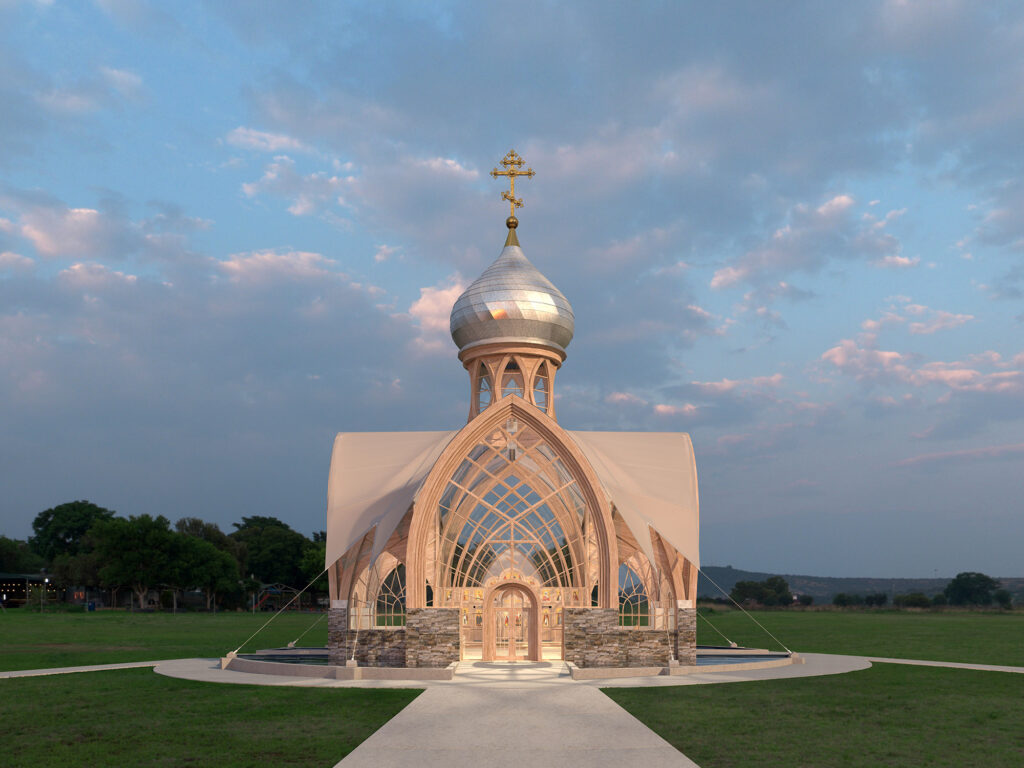

- Project Name: Church of St. John of Shanghai and San Francisco
- Location: South Carolina, USA
- Year: 2025
- Status: Nominee for the 2026 Golden Capital (Zolotaya Kapitel) and Golden Trezzini Awards
Architectural Narrative & Concept
The architecture of the Ark of Oikoumene emerges from the unprecedented scale of the personality of St. John of Shanghai and San Francisco—a pastor of worldwide diaspora for whom exile and wandering became the very essence of earthly life. Rejecting nostalgic historicism and literal stylization, this project stands as a poignant contemporary manifesto: a temple conceived as an absolute refuge in an era of global instability. The Ark of Oikoumene is not merely a building; it is a focal point for ecumenical Christianity, offering a space of total protection and spiritual gathering.
The design monumentalizes and reinterprets the fragile silhouette of the canvas tent-church that sheltered refugees on the island of Tubabao. Here, temporary shelter is transformed into an eternal architectural tent—the primary spatial metaphor representing the triumph of the spirit over elements and adversity.
Spatial & Volumetric Composition
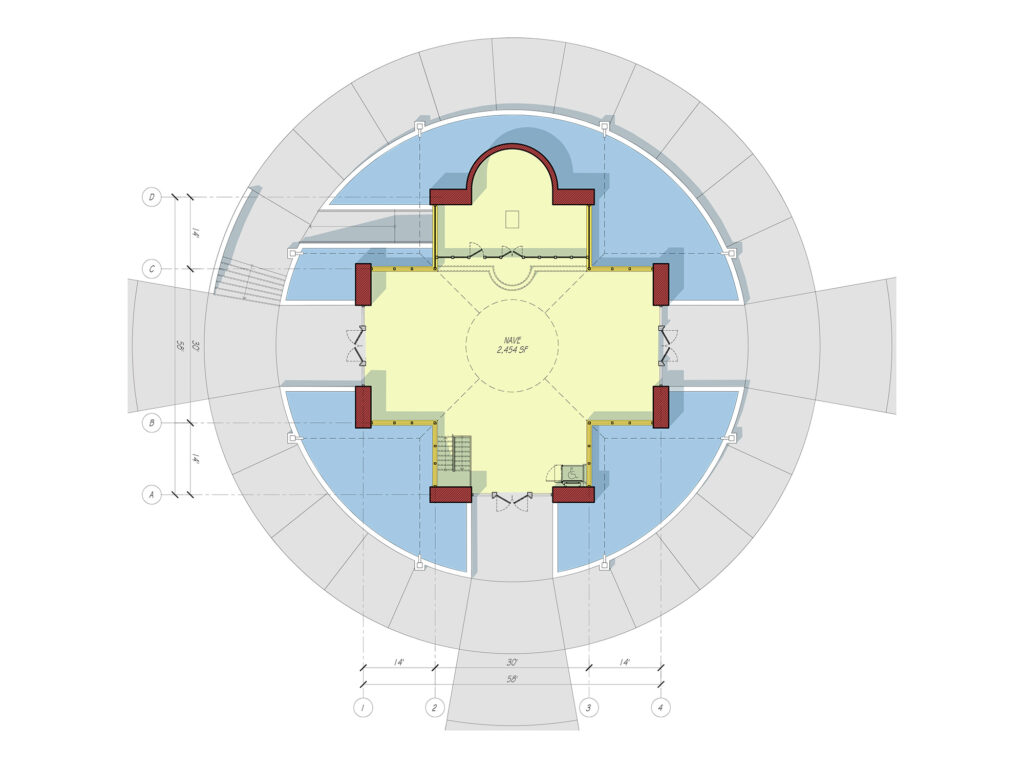
The layout is anchored by a traditional cross-in-square central core (naos) surmounted by a canonical dome, preserving a strict, unbroken link with Orthodox liturgical tradition. Developed around this core is a highly transparent, permeable volume enclosed by a lightweight tensile membrane structure. This membrane forms the building’s distinct silhouette and establishes the visual motif of the “Holy Protection” (Pokrov).
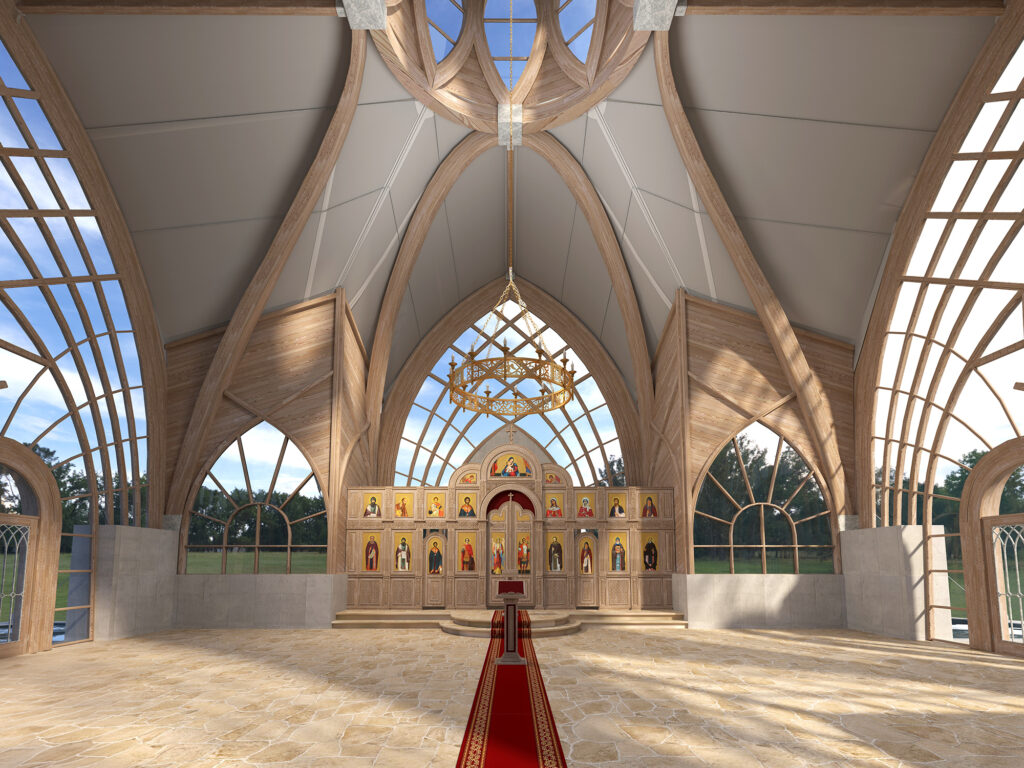
The interior environment thrives on an architectural paradox: while completely open to the surrounding natural landscape, the rhythmic cadence of the structural timber frame instills a profound sense of absolute sanctuary and enclosure. Integrated vertical circulation paths lead to the lower level (crypt), which houses a lower chapel, refectory, and infrastructure facilities, seamlessly fusing liturgical and social functions into a single spatial ecosystem.
Tectonic Logic, Materials & Sustainability
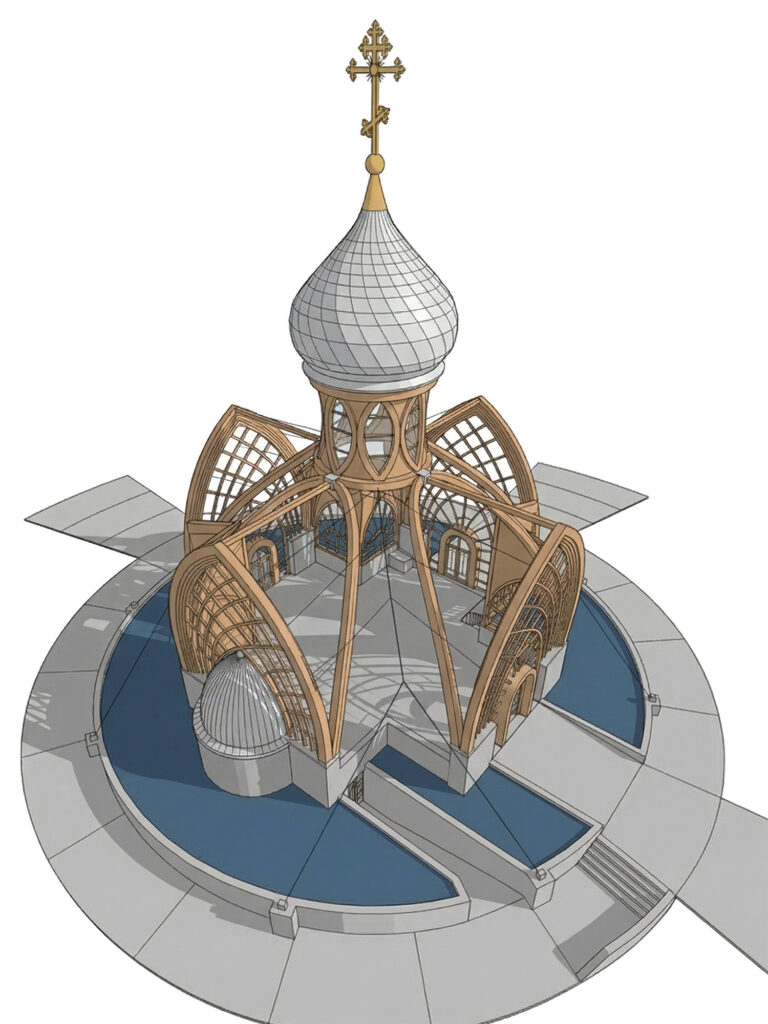
The architectural language of the project is defined by structural clarity and transparency. The primary structural framework utilizes massive glued laminated timber (GLT) arches. This element invites a dual reading: physically, its organic geometry echoes the dense jungles of Tubabao; symbolically, it conjures the image of the Garden of Eden, where tectonics are born not from the weight of stone, but from organic growth.
Key Technical & Environmental Features:
- Advanced Membrane Enclosure: A high-tech tensile shell made of architectural PTFE-coated fiberglass membrane acts as a light-diffusing screen and canopy. It stands as a symbol of the saving ark and a historical nod to the Tubabao tent-church.
- Passive Climate Control: Specially calculated wide overhangs of the membrane roof function as an architectural shield, protecting the transparent interior from overheating under the intense South Carolina sun.
- Hydrological Landscape Integration: A shallow circular ring-pond encircles the temple, boosting the isolation of the sacred core and introducing the motif of reflection. This feature serves as a direct reference to the island experience of Tubabao, creating a threshold between the mundane and the sanctified. Concurrently, it acts as a sustainable rainwater harvesting system.
- Material Grounding: Large-scale glass facades fill the sacred space with changing daylight, sky, and greenery. This ethereal transparency is grounded by a textured stone stylobate, physically anchoring the lightweight superstructure to the earth.