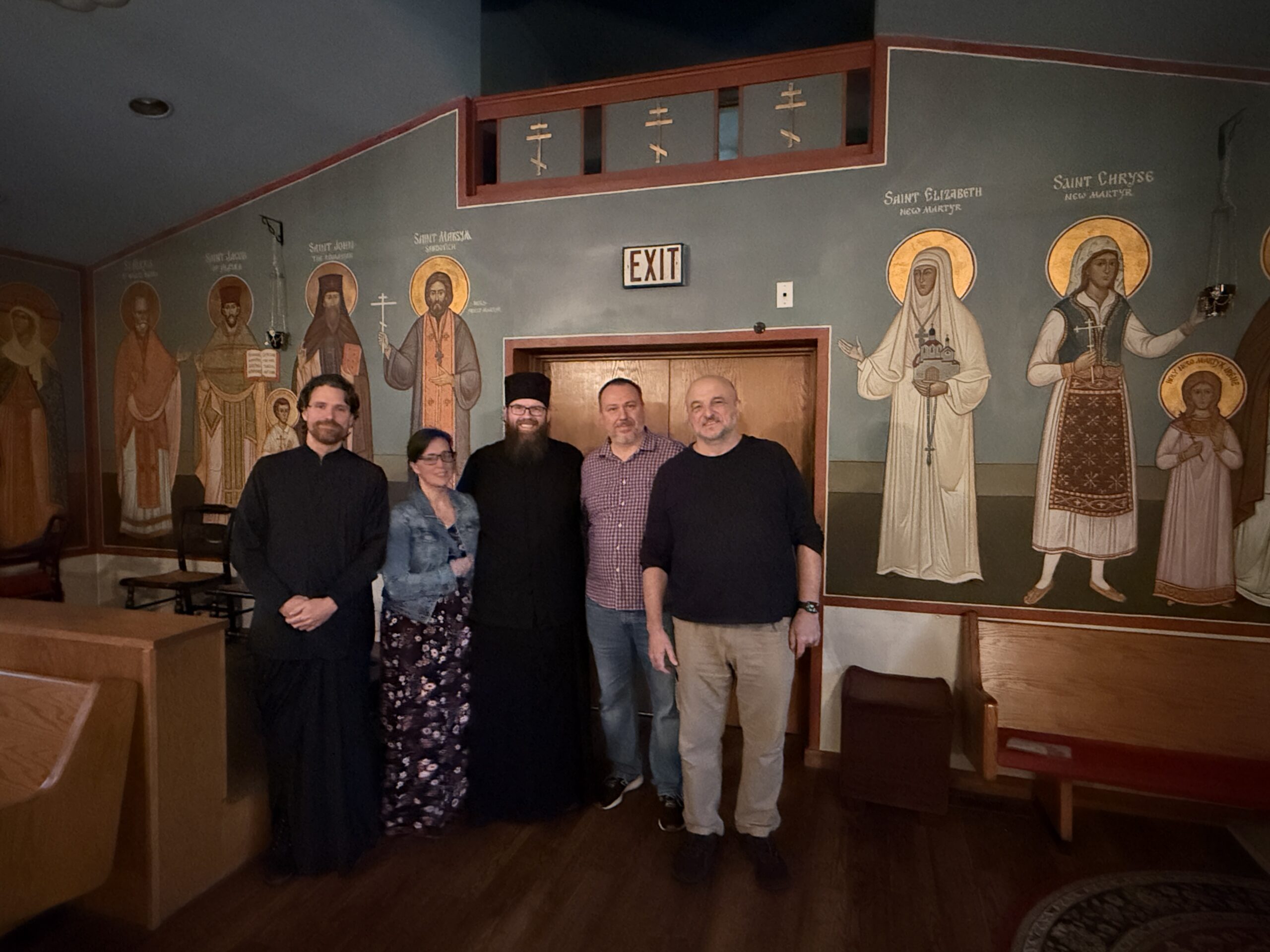
A meeting with the clergy and representatives of the parish administration was held at St. Innocent of Irkutsk Orthodox Church in Redford, Michigan, in the Detroit metropolitan area. The Reverend Father Joshua Genig, Rector of the parish and Dean of the Central States Deanery, gave us a tour of the church and spoke about one of the principal challenges the parish is currently facing: a serious shortage of space.
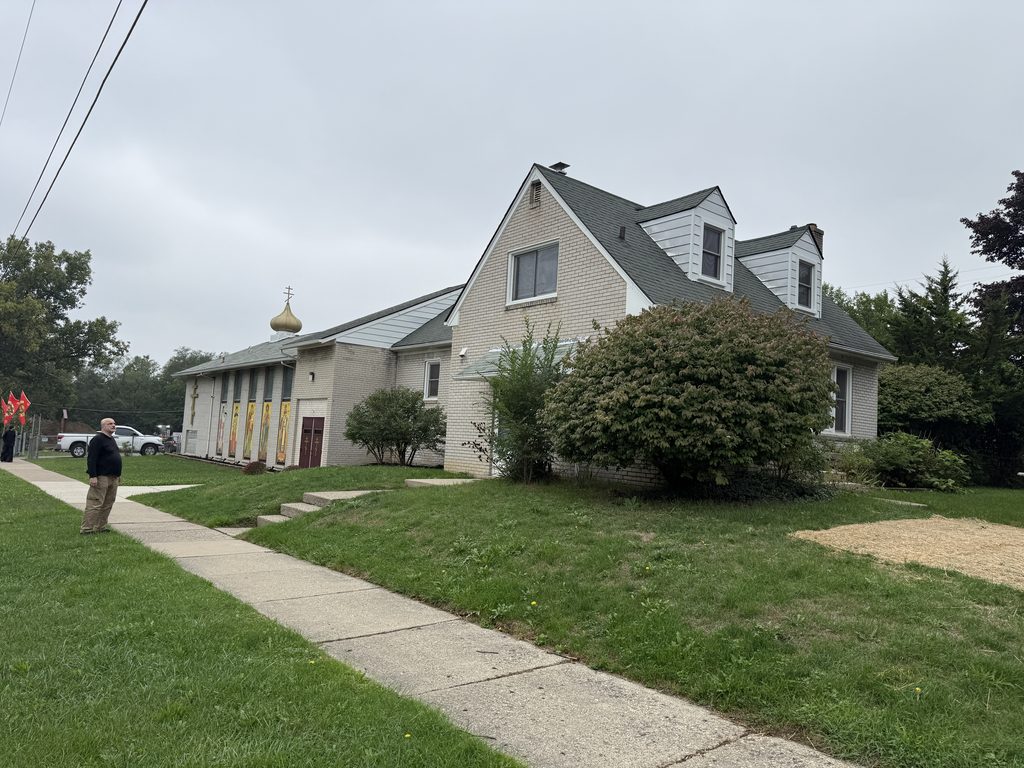
In recent years, the parish has grown considerably, and on some days more than 200 people attend services, while the church itself remains within its existing dimensions. At the recommendation of His Grace Matthew, Bishop of Sourozh and Interim Administrator of the Patriarchal Parishes in the USA and Canada, Fr. Joshua invited us to study the situation and discuss possible ways of expanding the church and providing better conditions for worship while accommodating the growing congregation.
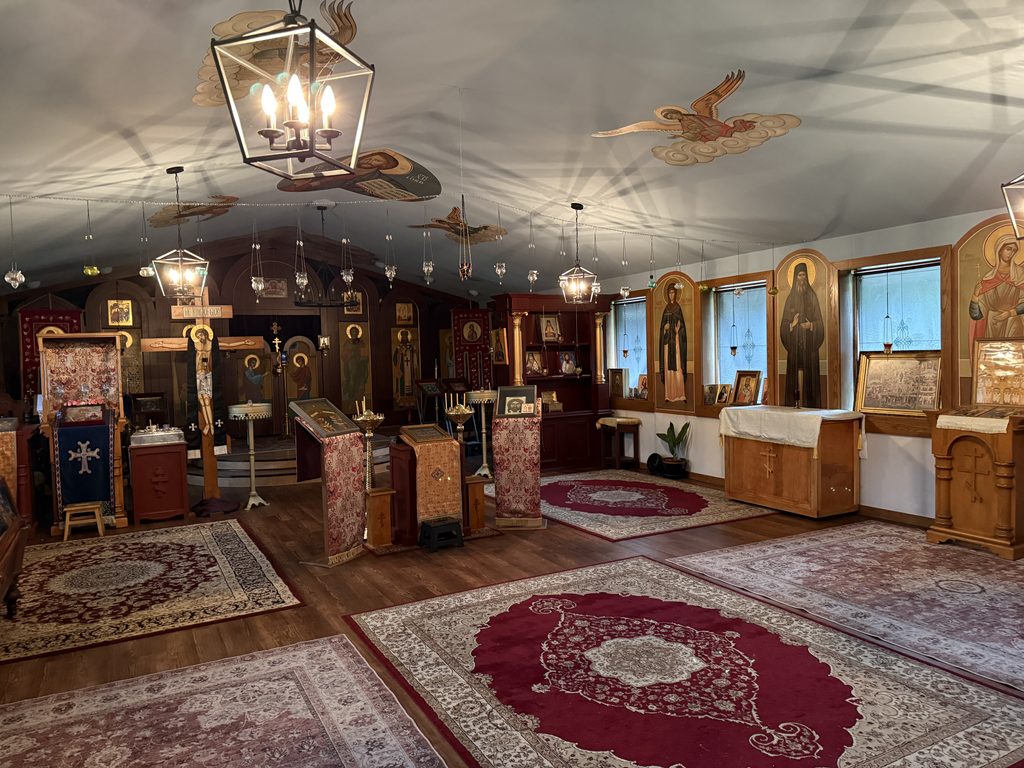
The existing church is clearly too small for the present number of worshippers. At the same time, any intervention is complicated by the remarkable iconographic ensemble that covers much of the interior and must be preserved. The iconographic work was carried out in ten stages between 1991 and 2008 by Very Rev. Archpriest Theodore Jurewicz of Erie, Pennsylvania, a master iconographer of the Russian Orthodox tradition. In addition to the monumental wall paintings, the church contains a number of smaller panel icons, many incorporating relics of saints. The preservation of this interior is therefore one of the fundamental conditions for any future architectural solution. Demolishing the existing church and replacing it with a new building is not considered an appropriate option.
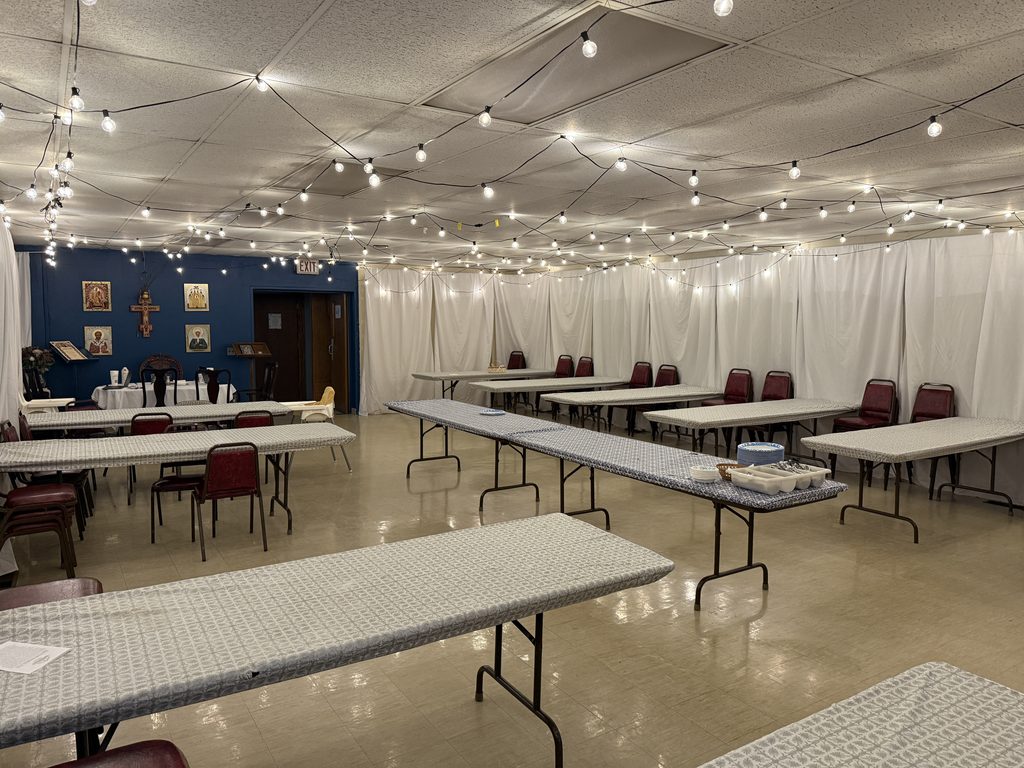
The problem extends beyond the nave itself. The parish hall and trapeza, located below the church, are also too small for the present congregation. Parking is another significant constraint. On days with large attendance, the existing parking area cannot accommodate all arriving vehicles, while the number of available spaces along the surrounding streets is also limited. Any future proposal will therefore have to consider the church, parish facilities, circulation, and parking as parts of a single architectural problem.
At the conclusion of the meeting, we agreed to study the existing conditions in detail and review the available drawings of the church and parish property. Based on this material, several preliminary approaches to the expansion will be developed. A further meeting with the Parish Council is planned for the following week, when additional questions will be discussed before preliminary design work begins.
Following the visit, we agreed that the project presents an unusually interesting architectural and technical challenge. The goal is to find a solution that will allow the growing community to worship comfortably and provide the parish with the infrastructure it now needs.