Church of St. John of Shanghai and San Francisco
Award-Winning Concept
Philosophy of the Design
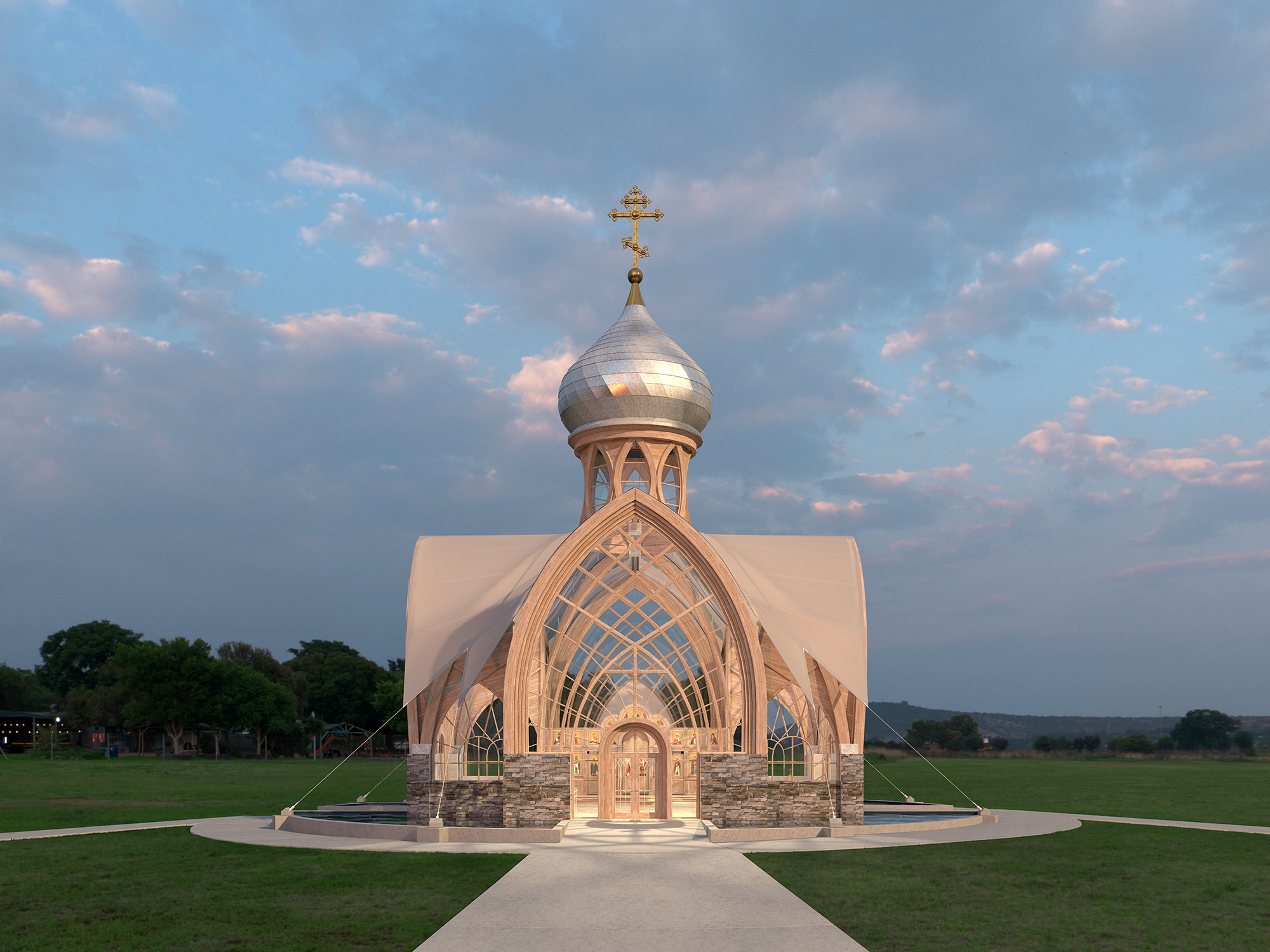
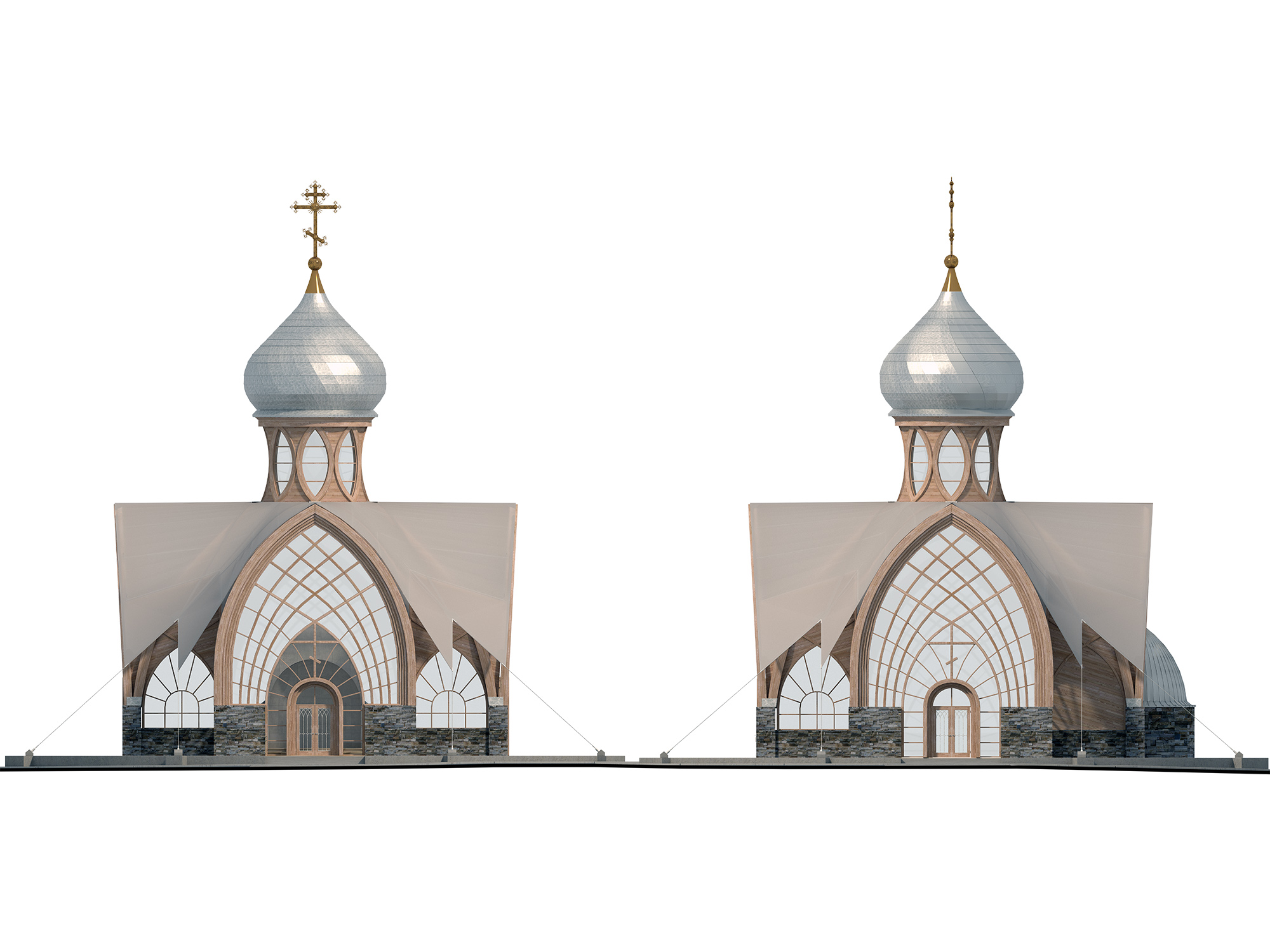
The church is conceived in response to the extraordinary scale of St. John’s life and witness. A shepherd of the Russian diaspora, he belonged to no single place; exile, displacement, and pilgrimage were not episodes in his biography but the very condition of his ministry. Rather than relying on nostalgic historicism, the project proposes a distinctly contemporary reading of Orthodox architecture: the church as a place of absolute refuge in an age of global instability.
The Ark of the Oikoumene is therefore not simply a building, but an architectural point of orientation for universal Christianity, a space of protection, gathering, and spiritual anchorage. The fragile image of the refugee tent church on Tubabao Island is reinterpreted here and given monumental form. What was once a temporary shelter is transformed into a permanent architectural canopy, the central spatial metaphor of the project and an image of spiritual endurance overcoming the forces of the world.
Urban and Landscape Concept
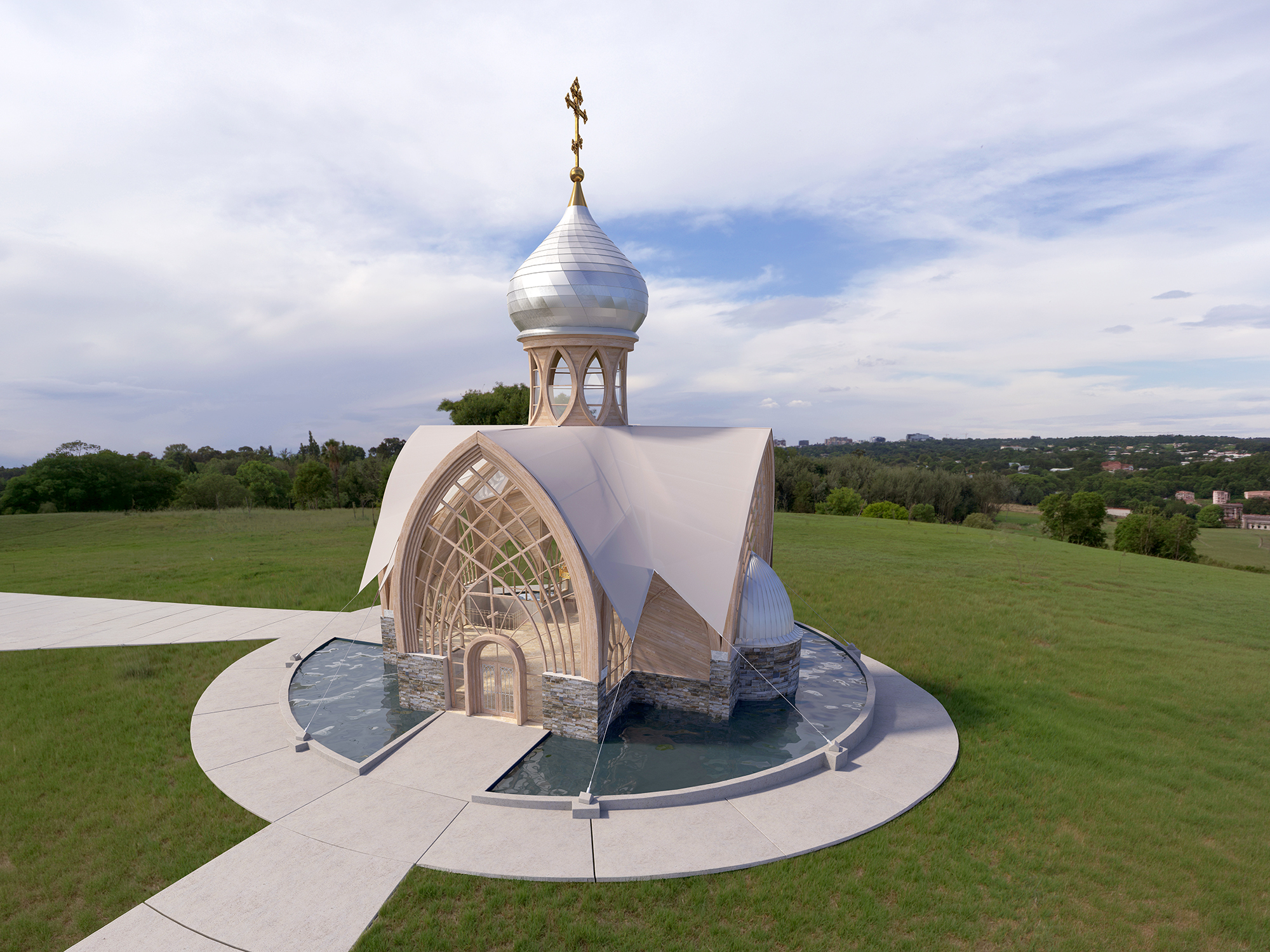
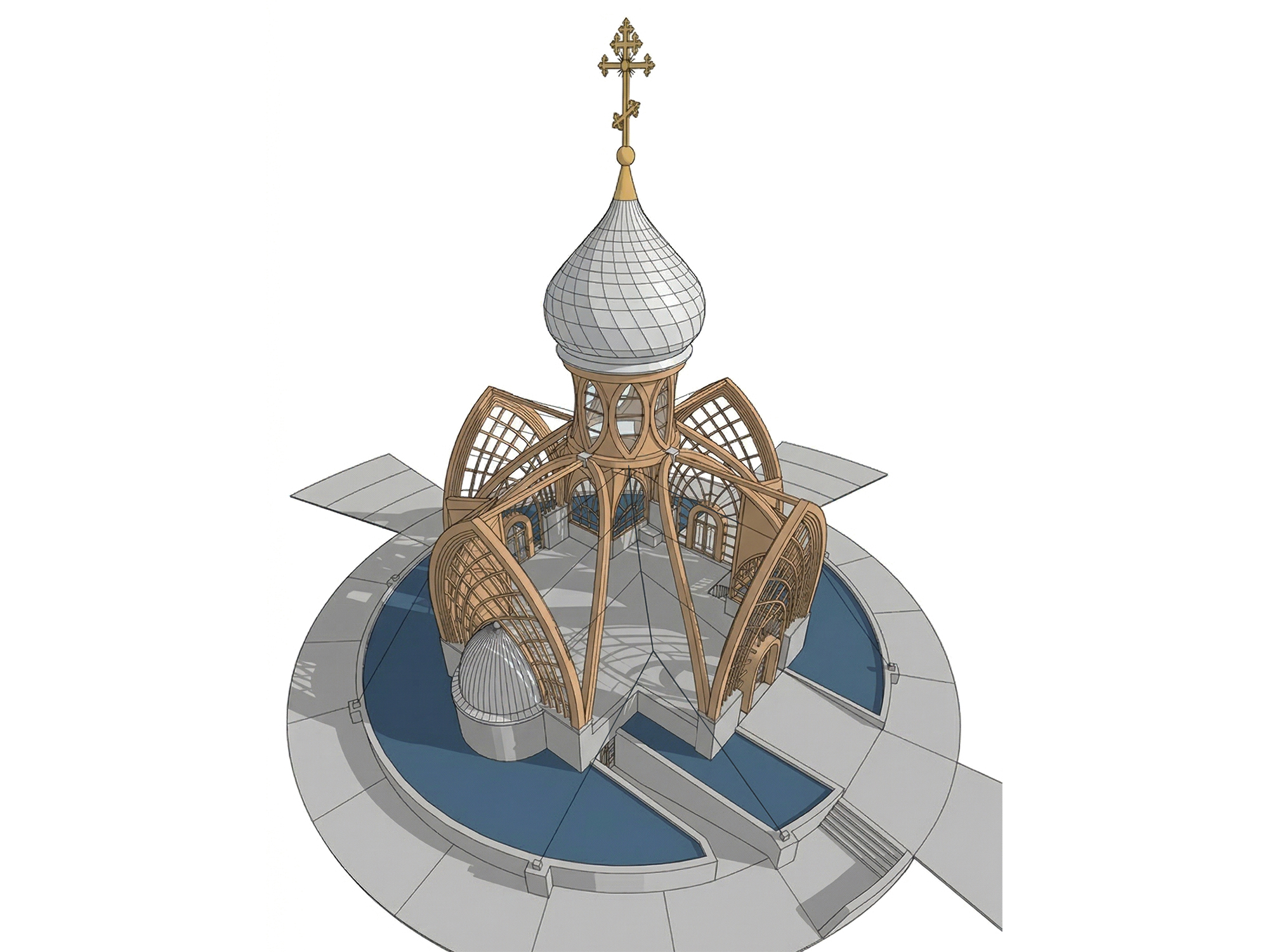
Set within the open natural landscape of South Carolina, the church is designed to work in direct dialogue with its surroundings. The transparency of the enclosure allows sky, light, and vegetation to become active participants in the sacred experience. A shallow circular reflecting pool surrounding the building plays a critical role in this composition. It heightens the sense of separation around the sacred core, introduces reflection as both a visual and symbolic device, and recalls the island condition of Tubabao, establishing a threshold between the ordinary and the consecrated.
The climate of South Carolina also informed the architectural response. The broad overhangs of the membrane roof act as a large environmental canopy, shielding the transparent interior from heat gain and the intensity of the southern sun while reinforcing the project’s image of shelter and protection.
Spatial Organization
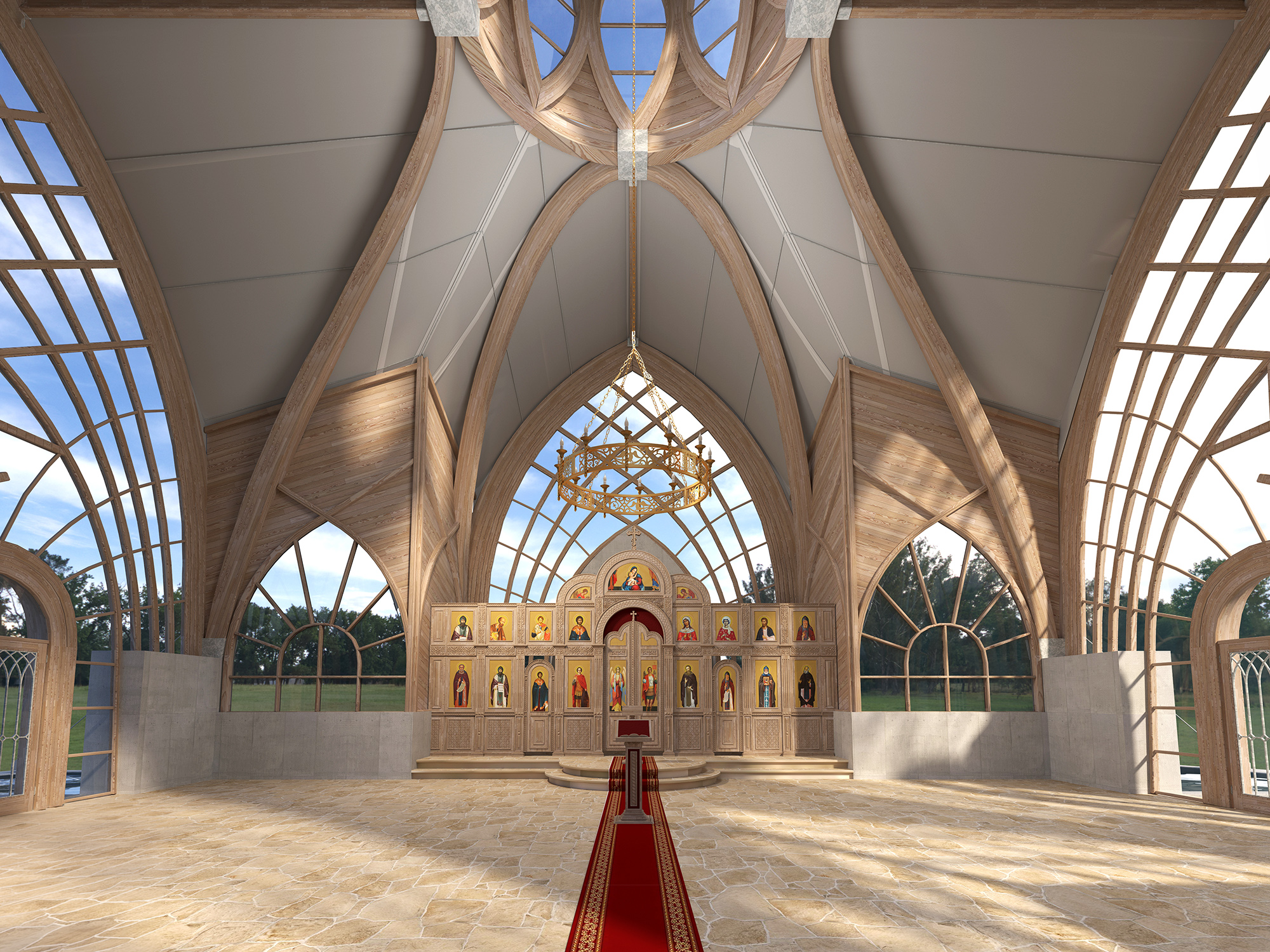
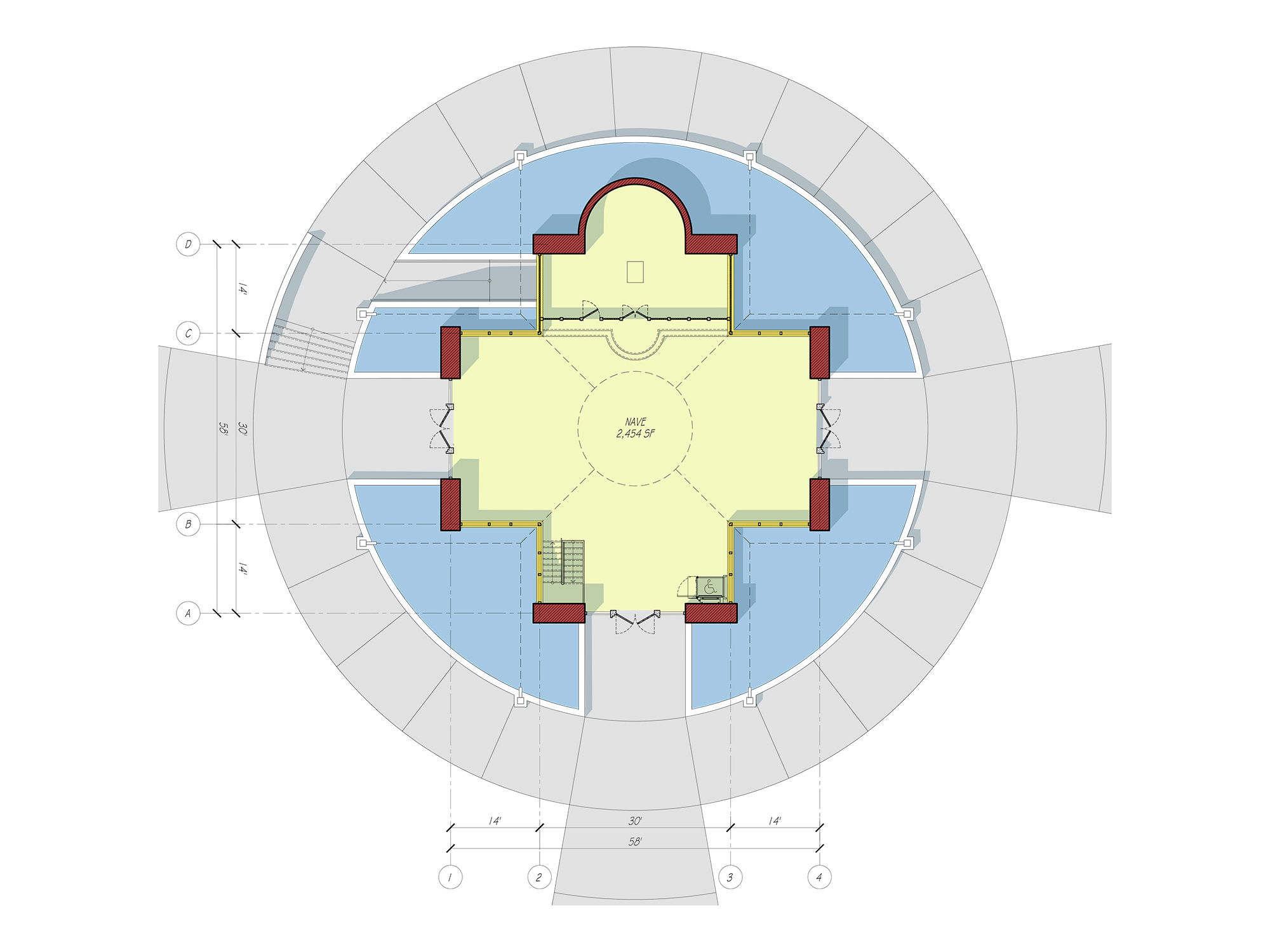
The plan is structured around a cruciform central core, the naos, crowned by a traditional dome. Around this core, a transparent volume unfolds beneath a light tent-like membrane that defines the silhouette of the building and establishes the visual theme of protective covering. The spatial experience is built on a deliberate paradox: the church remains visually open to the surrounding landscape, yet the rhythm and density of the structural frame create a profound sense of enclosure and safety within.
Vertical circulation is integrated into the main body of the church and leads to the lower level, which accommodates the lower chapel, refectory, and supporting program. In this way, liturgical and social functions are brought together within a single spatial system rather than treated as separate architectural episodes.
Materials and Structural Logic
The architectural language of the project is defined by permeability, structural clarity, and material restraint. Its primary expressive element is a system of glued laminated timber arches that forms the main load-bearing frame. These arches invite a dual reading: physically, they evoke the dense vegetal environment of Tubabao; symbolically, they suggest the image of a paradisal garden, where order emerges not from the weight of masonry but from organic growth and living structure.
Large glazed surfaces are set between the timber ribs, allowing light to become one of the building’s principal materials. The composition rises from a textured stone-clad stylobate that grounds the otherwise light and open structure. Above, the canonical dome completes the composition and preserves a clear, disciplined connection to the Orthodox tradition.
Key Project Features
— A contemporary interpretation of Orthodox church architecture without archaism or direct historical quotation.
— A cruciform, domed liturgical core set within a permeable, light-filled enclosure.
— A tent-like architectural skin of PTFE membrane serving as a high-performance protective canopy and light-diffusing screen, while symbolically recalling both the saving ark and the historical tent church at Tubabao.
— A long-span spatial system of glued laminated timber structures defining both the tectonic order and the symbolic logic of the building.
— A circular reflecting pool with integrated rainwater harvesting, functioning as both a landscape device and a sustainability strategy.
— Passive climate control through deep membrane roof overhangs that protect the interior from overheating in the South Carolina climate.
— An inclusive environment and multi-level program, with social and support functions integrated into the lower level.
March 22, 2026
